GENEVA, SWITZERLAND — As we navigate through the second quarter of 2026, the global geopolitical landscape is undergoing a profound and rapid transformation. The Middle East, historically a fulcrum of international tension and economic volatility, is currently at the center of a massive diplomatic overhaul. Two major developments are dominating world headlines today: the unprecedented international summit for the reconstruction of Gaza, and Iran’s strategic diplomatic realignments.
For digital economies, international shipping conglomerates, and everyday consumers, these political maneuvers are not just distant news stories—they are immediate factors drastically reshaping global trade routes, inflation rates, and international trade agreements. Here is a comprehensive deep dive into the trending geopolitical shifts of 2026 and what they mean for the future of the global economy.
The 2026 Gaza Reconstruction Summit: A Path to Regional Stability
Following years of devastating conflict and humanitarian crises, April 2026 has brought a vital glimmer of hope to the Eastern Mediterranean. The United Nations, in unprecedented collaboration with the European Union, the United States, and major Gulf states, has officially convened the “2026 Gaza Reconstruction and Stabilization Summit” in Geneva.
This historic summit marks a pivotal transition from temporary ceasefires to long-term structural rebuilding. Multi-billion-dollar pledge drives are currently underway, led by a coalition of Middle Eastern economic powerhouses including Saudi Arabia, the United Arab Emirates, and Qatar. The primary focus of the summit is not merely rebuilding residential infrastructure, but establishing a sustainable, independent economic framework for the region.
Key Focus Areas of the Summit:
- Infrastructure and Energy: Rebuilding essential desalination plants, solar energy grids, and telecommunications networks to ensure self-sufficiency.
- The “Maritime Corridor” Project: The establishment of a heavily monitored, permanent maritime trade corridor connecting the Gaza coast directly to European ports, aimed at bypassing traditional terrestrial bottlenecks and stimulating a new import/export micro-economy.
- Technological Investment: Tech giants from Asia and Europe are proposing educational frameworks and digital infrastructure investments to integrate the region’s youth into the global freelance and remote-work economy.
If successful, this stabilization effort could significantly de-escalate one of the world’s most volatile flashpoints, reassuring global markets and stabilizing the highly sensitive energy sector.
Iran’s Diplomatic Realignment and the Strait of Hormuz
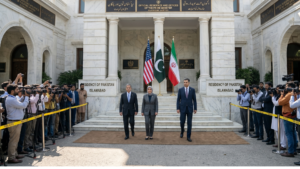
Simultaneously, the geopolitical calculus involving Iran is shifting dramatically. Following back-channel negotiations mediated by regional neighbors like Oman and Pakistan, Tehran is engaging in a complex diplomatic dance aimed at sanctions relief and economic survival.
The most critical aspect of these developments for the global economy is the security of the Strait of Hormuz. As the conduit for roughly 20% of the world’s total global oil consumption, any friction in this narrow waterway sends immediate shockwaves through global stock markets and inflates the cost of living worldwide. In recent weeks, diplomatic sources indicate that a tentative “freedom of navigation” understanding has been reached, drastically reducing the presence of military patrols and the threat of vessel seizures in the strait.
This de-escalation is a strategic pivot. By ensuring the uninterrupted flow of global energy, Iran is positioning itself as a stabilizing actor in the hopes of accelerating the removal of crippling Western economic sanctions. This shift is also heavily influenced by Iran’s expanding trade partnerships with Eastern powerhouses, who demand secure maritime routes for their vast energy imports.
The Domino Effect on International Trade Agreements
The diplomatic thawing in the Middle East is having an immediate, positive domino effect on international trade. For the past few years, global supply chains have been crippled by rerouting necessities—forcing cargo ships to bypass the Suez Canal and take the agonizingly long, expensive journey around the Cape of Good Hope in South Africa.
With the stabilization of the Red Sea and the Eastern Mediterranean, major maritime logistics companies are announcing a permanent return to traditional shipping routes. This return is a monumental victory for global trade, achieving several immediate economic benefits:
- Plummeting Freight Rates: The cost of shipping a standard 40-foot container from Asia to Europe is projected to drop by nearly 40% in the coming months as transit times are slashed by up to two weeks.
- Revival of the Suez Canal Economy: Egypt’s economy, which relies heavily on transit fees from the Suez Canal, is expected to see a massive resurgence, stabilizing the North African economic bloc.
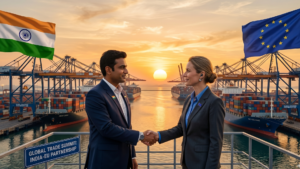
- Acceleration of Free Trade Pacts: The newfound stability is acting as a catalyst for mega-agreements. The recently finalized India-EU Free Trade Agreement, for instance, relies heavily on the uninterrupted flow of goods through the Suez Canal. A secure Middle East guarantees that the ambitious trade volume targets set by New Delhi and Brussels can be met without logistical friction.
The Rise of the “Middle Corridor” and Supply Chain Diversification
Despite the positive news regarding traditional maritime routes, the geopolitical scares of the early 2020s have permanently altered how multinational corporations view risk. The trending buzzword in 2026 economic forums is “Supply Chain Resilience.”
While the Suez Canal remains vital, global powers are aggressively funding the “Middle Corridor” (the Trans-Caspian International Transport Route). This vast network of railways and ferries connects China and India to Europe via Central Asia and the Caucasus, completely bypassing the traditional Middle Eastern maritime choke points.
Countries like Kazakhstan, Azerbaijan, and Turkey are seeing an unprecedented influx of foreign direct investment (FDI) to upgrade their rail and port infrastructure. For SEO and digital marketing professionals managing commercial properties, this shift means emerging markets in Central Asia are rapidly becoming high-value targets for digital expansion, e-commerce growth, and localized marketing campaigns.
Looking Ahead: The Economic Outlook for the Rest of 2026
As we move deeper into 2026, the intersection of diplomacy and economics has never been more pronounced. The reconstruction efforts in Gaza and the nuanced diplomatic strategies of Iran serve as a powerful reminder that global trade does not exist in a vacuum. It is deeply tethered to political stability, human security, and regional cooperation.
For businesses and consumers alike, the current geopolitical shifts offer a cautious optimism. If the diplomatic frameworks established this month hold firm, the global economy is poised for a period of vigorous recovery, defined by lowered inflation, booming international trade, and a more interconnected, resilient global supply chain. The world is watching closely, and the next few months will dictate the economic trajectory of the decade.