The “Why”: The Gulfstream vs. Bombardier Feud
The catalyst for this specific threat is a regulatory standoff over business jets.
- The U.S. Complaint: President Trump alleges that Canada is “wrongfully and illegally” refusing to certify new American-made Gulfstream jets (specifically the G500, G600, G700, and G800). He claims this is a protectionist move by Canada to help its own domestic champion, Bombardier, maintain a market advantage.
- The Retaliation: In response, Trump has threatened to decertify all Canadian-made aircraft. This includes the Bombardier Global Express and potentially the Airbus A220 (formerly the Bombardier C-Series), which is a staple for many U.S. commercial airlines for regional flights.
The Two-Pronged Threat
- 50% Tariffs: If Canada doesn’t “correct” the certification issue immediately, Trump has vowed to slap a 50% import tax on any Canadian aircraft sold into the U.S. This would make Canadian planes prohibitively expensive compared to American or European competitors.
- Decertification: This is the “nuclear option.” If an aircraft is decertified by the FAA (at the President’s urging), it essentially loses its “license to fly” in U.S. airspace. Aviation experts are currently debating whether a President has the legal authority to bypass safety regulators (like the FAA) to decertify a plane for purely political or trade reasons.
The “Big Picture” Conflict
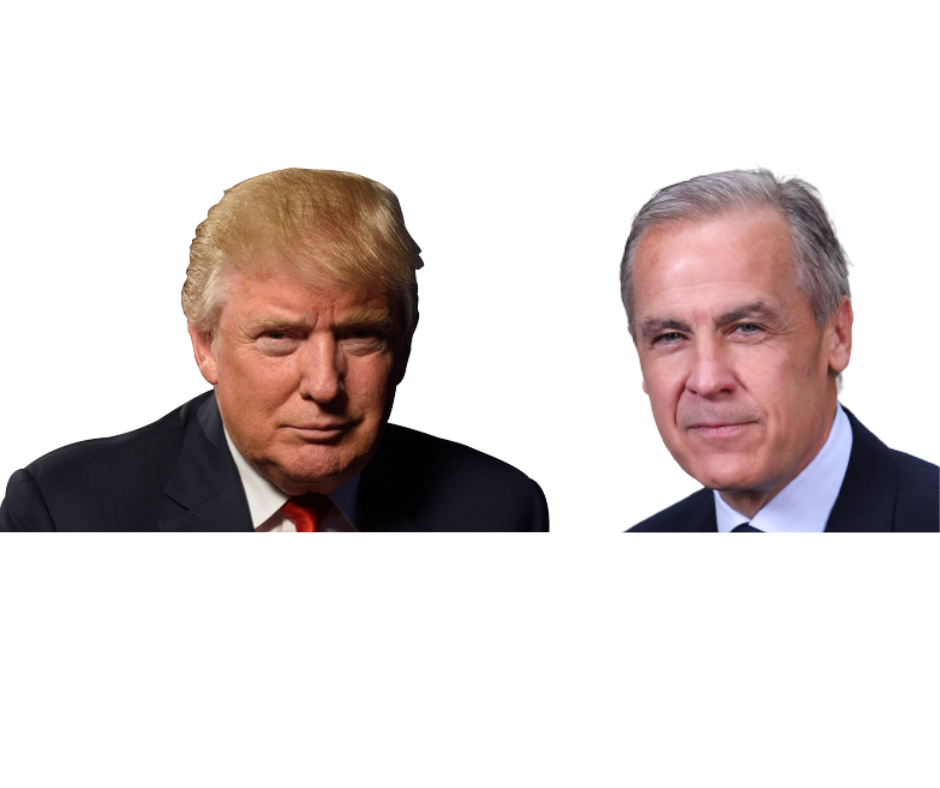
This aviation spat is part of a much larger breakdown in relations between President Trump and Canadian Prime Minister Mark Carney:
- The China Factor: Earlier this week, Trump threatened a 100% blanket tariff on all Canadian goods. He is furious over Canada’s recent “Strategic Partnership” talks with China, accusing Canada of becoming a “drop-off port” for Chinese goods to bypass U.S. trade barriers.
- The Carney Stance: PM Mark Carney (who took office recently) has signaled a desire to diversify Canada’s trade away from the U.S., seeking closer ties with India, ASEAN nations, and China. This “independence” has clashed directly with Trump’s “America First” policy.
- Economic Integration: The threat is particularly messy because the two industries are deeply entwined. For example, many Bombardier jets use parts made in Texas, Iowa, and Indiana. A strike against Bombardier is, in many ways, a strike against the U.S. workers who supply those parts.